
Padrón in Spain: A Simple Guide for Expats
Everything you need to know about registering on the padrón (empadronamiento) in Spain, why it’s important and how to do it.
Last updated: July 2026
Estimated reading time: 6 minutes
A Guide to the Padrón in Spain
If you’ve recently moved to Spain, one of the first things you’ll probably be told is that you need to register on the padrón.
Many people aren’t sure what the padrón is, whether it’s compulsory or how it differs from Spanish residency. The good news is that it’s much simpler than it sounds.
The process of registering on the padrón is known in Spanish as empadronamiento. In this guide, I’ll explain what the padrón is, why it’s important and how to register.

If you’ve recently moved to Spain, one of the first things you’ll probably be told is that you need to register on the padrón.
Many people aren’t sure what the padrón is, whether it’s compulsory or how it differs from Spanish residency. The good news is that it’s much simpler than it sounds.
The process of registering on the padrón is known in Spanish as empadronamiento. In this guide, I’ll explain what the padrón is, why it’s important and how to register.
What is the padrón?
The Padrón Municipal de Habitantes, usually shortened to simply the padrón, is the official register of everyone who lives in a municipality in Spain.
Every town hall (ayuntamiento) keeps its own padrón, recording the people who normally live within its boundaries.
In simple terms, it is the town hall’s official record of your address.
When you register, you become part of the official population of that municipality. This information helps local councils plan public services and provides you with official proof of where you live.
Is registering on the padrón compulsory?
Yes.
Spanish law states that anyone who normally lives in Spain should register on the padrón of the municipality where they usually live.
If you divide your time between two properties, you should register where you spend most of the year.
Why is the padrón important?
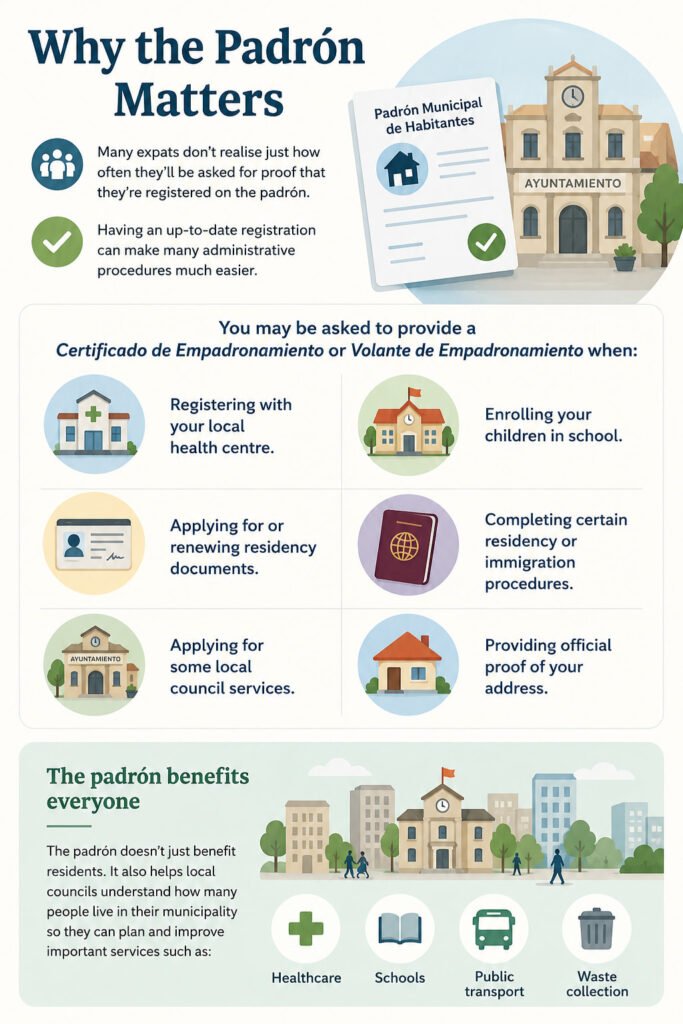
Many expats don’t realise just how often they’ll be asked for proof that they’re registered on the padrón.
Having an up-to-date registration can make many administrative procedures much easier.
For example, you may be asked to provide a Certificado de Empadronamiento or Volante de Empadronamiento when:
- Registering with your local health centre.
- Enrolling your children in school.
- Applying for or renewing residency documents
- Completing certain residency or immigration procedures.
- Applying for some local council services.
- Providing official proof of your address.
The padrón doesn’t just benefit residents. It also helps local councils understand how many people live in their municipality so they can plan services such as healthcare, schools, public transport and waste collection.
Many expats don’t realise just how often they’ll be asked for proof that they’re registered on the padrón.
Having an up-to-date registration can make many administrative procedures much easier.
For example, you may be asked to provide a Certificado de Empadronamiento or Volante de Empadronamiento when:
- Registering with your local health centre.
- Enrolling your children in school.
- Applying for or renewing residency documents
- Completing certain residency or immigration procedures.
- Applying for some local council services.
- Providing official proof of your address.
The padrón doesn’t just benefit residents. It also helps local councils understand how many people live in their municipality so they can plan services such as healthcare, schools, public transport and waste collection.
Is the padrón the same as Spanish residency?
No.
This is probably the biggest misconception.
The padrón simply records where you live. It does not give you legal residency in Spain, nor does it replace a TIE, an EU Registration Certificate or any other immigration document.
Equally, having legal residency does not automatically mean you’re registered on the padrón.
They are two separate administrative procedures.
Does registering on the padrón affect my taxes?
No.
Registering on the padrón does not automatically make you a Spanish tax resident.
Your tax residency is determined under separate tax rules and depends on factors such as how much time you spend in Spain and your individual circumstances.
Who can register on the padrón?
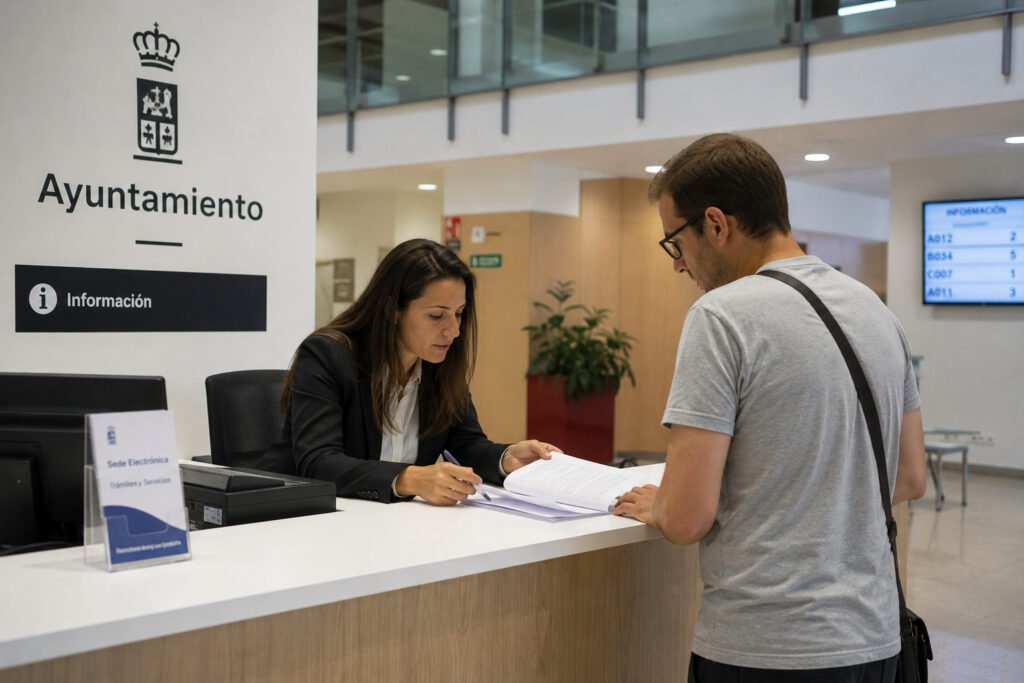
The padrón is based on where you normally live, not whether you own the property.
You can usually register if you are:
- A homeowner.
- Renting a property.
- Renting a room.
- Living with family.
- Living with friends.
The important thing is that the address is your normal place of residence.
The padrón is based on where you normally live, not whether you own the property.
You can usually register if you are:
- A homeowner.
- Renting a property.
- Renting a room.
- Living with family.
- Living with friends.
The important thing is that the address is your normal place of residence.
How do I register on the padrón?
The process is usually straightforward, although each town hall has its own appointment system and document requirements.
Check your local town hall website
Find out whether you need to book an appointment and what documents are required.
Gather your documents
Most town halls will ask for: your passport or identity document, your NIE or TIE (if applicable), proof of your address, such as a tenancy agreement or property deeds and a completed application form.
Some town halls may request additional documents, particularly if you’re living with someone else or registering children.
Attend your appointment
A member of staff will check your documents and register you on the padrón.
Request proof of registration
Once you’ve been registered, you can request either a volante de empadronamiento or a certificado de empadronamiento. The organisation requesting proof of address will normally tell you which document you need.
Please note: Every town hall has slightly different procedures and document requirements. Before attending your appointment, always check the latest information on your local council’s website, as appointment systems and required documents can change.
What happens if I move?
If you move to a different municipality, you should register on the padrón in your new area.
Once your new registration has been completed, your previous municipality will normally be updated automatically.
If you move to a different address within the same municipality, you should let your town hall know so they can update your details.
Do I need to renew my padrón?
For many people, no.
However, some non-EU nationals without long-term residence permission are required to renew their padrón registration every two years.
If this applies to you, your local town hall will usually contact you or provide information about the renewal process.
Need help with the padrón?
Not sure which documents you need? Need an interpreter for your appointment? Confused by the paperwork?
Bridging Spain can help you prepare your documents, explain the process and accompany you to appointments where language support is needed.
Frequently Asked Questions

Need help registering on the padrón?
Spanish paperwork can sometimes feel overwhelming, especially if you’re unfamiliar with the language or the process.
At Bridging Spain, we regularly help English-speaking residents understand Spanish administrative procedures, prepare the correct documentation and attend appointments when language support is needed.
If you’d like help with your padrón registration or any other administrative procedure in Spain, we’d be happy to help.
Need help registering on the padrón?
Spanish paperwork can sometimes feel overwhelming, especially if you’re unfamiliar with the language or the process.
At Bridging Spain, we regularly help English-speaking residents understand Spanish administrative procedures, prepare the correct documentation and attend appointments when language support is needed.
If you’d like help with your padrón registration or any other administrative procedure in Spain, we’d be happy to help.
Need help with Spanish paperwork?
Whether you need help with the padrón, a TIE, healthcare or other administrative procedures, Bridging Spain offers interpreting, translation and practical support to help you navigate life in Spain with confidence.