
Translation vs Interpreting Explained
Estimated reading time: 4 minutes
Translating vs Interpreting: What’s the Difference?
If you’ve ever searched online for someone to help you overcome a language barrier, you’ve probably come across the terms translator and interpreter. Many people use them interchangeably, but they actually describe two very different professions.
Understanding the difference can help you choose the right service and avoid unnecessary stress.
What is translation?
Translation is the process of converting written text from one language into another.
A translator works with documents rather than spoken conversations. They have time to research terminology, check grammar and ensure the finished document is accurate and reads naturally in the target language.
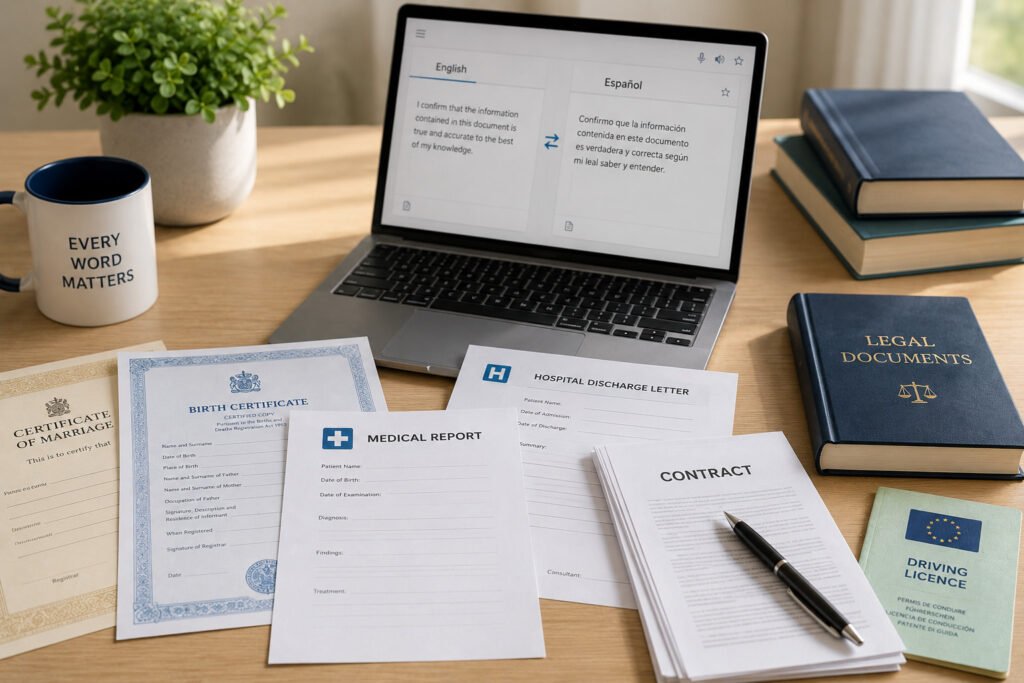
Examples of documents that may need translating include:
- Birth and marriage certificates
- Medical reports and hospital discharge letters
- Driving licences
- Property purchase documents
- Residency and immigration documents
- Employment contracts
- Academic certificates and qualifications
- Legal documents
The final product is another written document.
Examples of documents that may need translating include:
- Birth and marriage certificates
- Medical reports and hospital discharge letters
- Driving licences
- Property purchase documents
- Residency and immigration documents
- Employment contracts
- Academic certificates and qualifications
- Legal documents
The final product is another written document.
What is interpreting?
Interpreting is the process of converting spoken language from one language into another.
An interpreter listens to one person speaking and communicates the message in another language almost immediately.
Unlike translators, interpreters work in real-time during conversations.
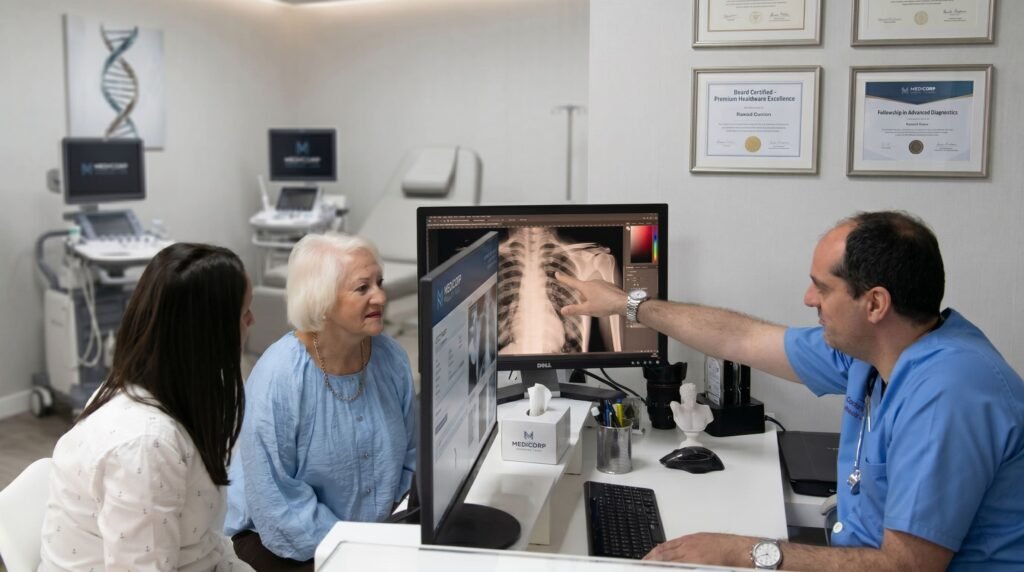
Interpreters are commonly used for:
- Hospital appointments
- GP appointments
- TIE appointments
- Notary appointments
- Property purchases
- School meetings
- Business meetings
The aim is for both parties to communicate naturally, even if they don’t speak the same language.
Interpreters are commonly used for:
- Hospital appointments
- GP appointments
- TIE appointments
- Notary appointments
- Property purchases
- School meetings
- Business meetings
The aim is for both parties to communicate naturally, even if they don’t speak the same language.
Which service do you need?
A simple way to remember the difference is:
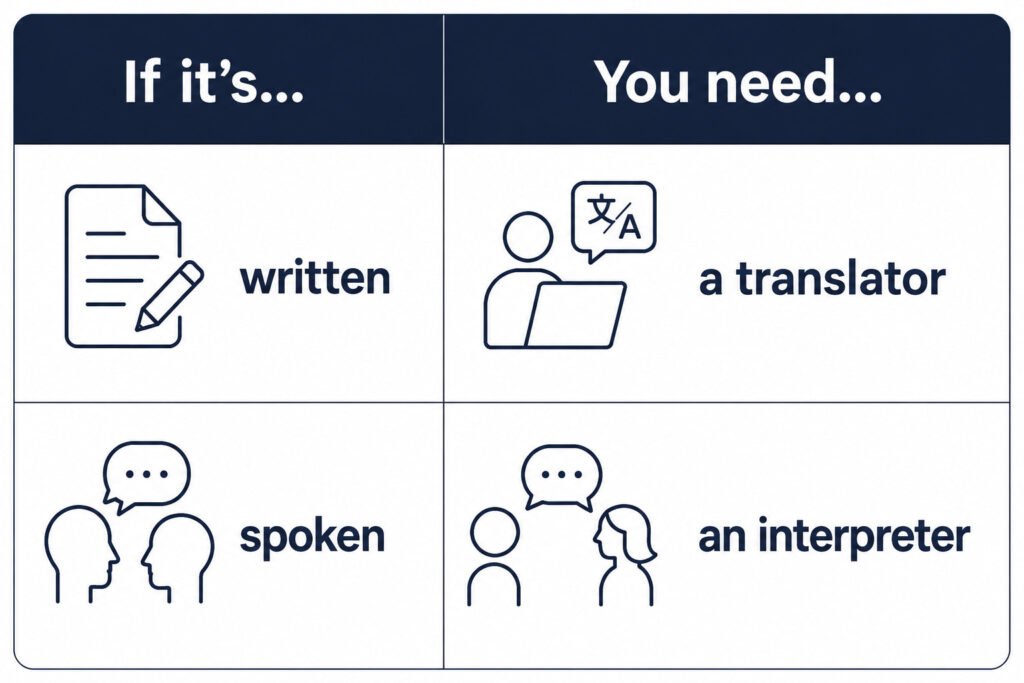
For example:
- You receive an official letter in Spanish that you need in English → Translation
- You need a birth or marriage certificate translated → Translation
- You need a medical report translated for an insurance company → Translation
- You have a doctor’s appointment and need help communicating → Interpreting
- You have a meeting with a solicitor or notary and need language support → Interpreting
- You need someone to accompany you to a government office or business meeting → Interpreting
Can one person do both?
Some language professionals offer both translation and interpreting services, but they require different skills.
Translation focuses on producing accurate written documents, while interpreting requires excellent listening skills, quick thinking and the ability to communicate clearly under pressure.
Although the two professions are closely related, they are not the same.
How Bridging Spain can help
Bridging Spain offers interpreting and translation services for English-speaking expats, residents and visitors throughout Spain. From attending medical appointments to translating important documents and assisting with communication, we’re here to help whenever language becomes a barrier.

Final thoughts
Whether you’re translating a document or attending an important appointment, understanding the difference between translation and interpreting helps you choose the right support.
Translation is about written words.
Interpreting is about spoken communication.
Knowing the difference helps ensure you receive the right support when you need it most.
Need Help Navigating Life in Spain?
Bridging Spain provides professional interpreting and translation services for English-speaking expats, residents and visitors throughout Spain.