
Private vs Public Healthcare in Spain
Last updated: June 2026
Estimated reading time: 5 minutes
What expats need to know
For many expats, understanding the healthcare system can feel confusing at first.
Should you use public healthcare or private healthcare? Why are some prescriptions subsidised while others are not? And what happens if you are not automatically entitled to public healthcare in Spain?
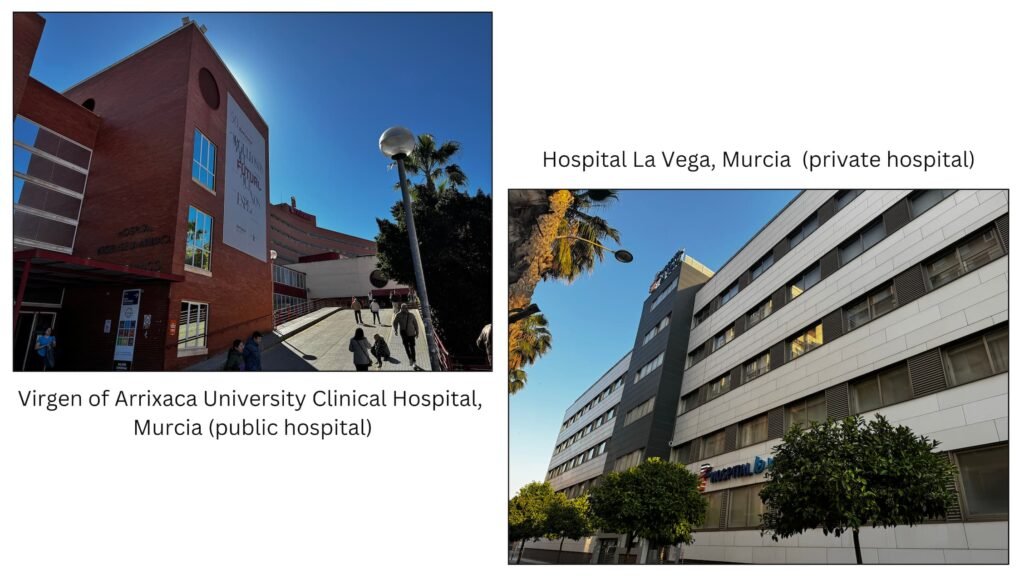
For many expats, understanding the healthcare system can feel confusing at first.
Should you use public healthcare or private healthcare? Why are some prescriptions subsidised while others are not? And what happens if you are not automatically entitled to public healthcare in Spain?
Spain has one of the most respected healthcare systems in Europe, but the experience can differ significantly depending on whether you access public healthcare (sanidad pública) or private healthcare (sanidad privada).
This guide explains the main differences between both systems and what English-speaking residents should realistically expect when accessing healthcare in Spain.
How Healthcare in Spain Works
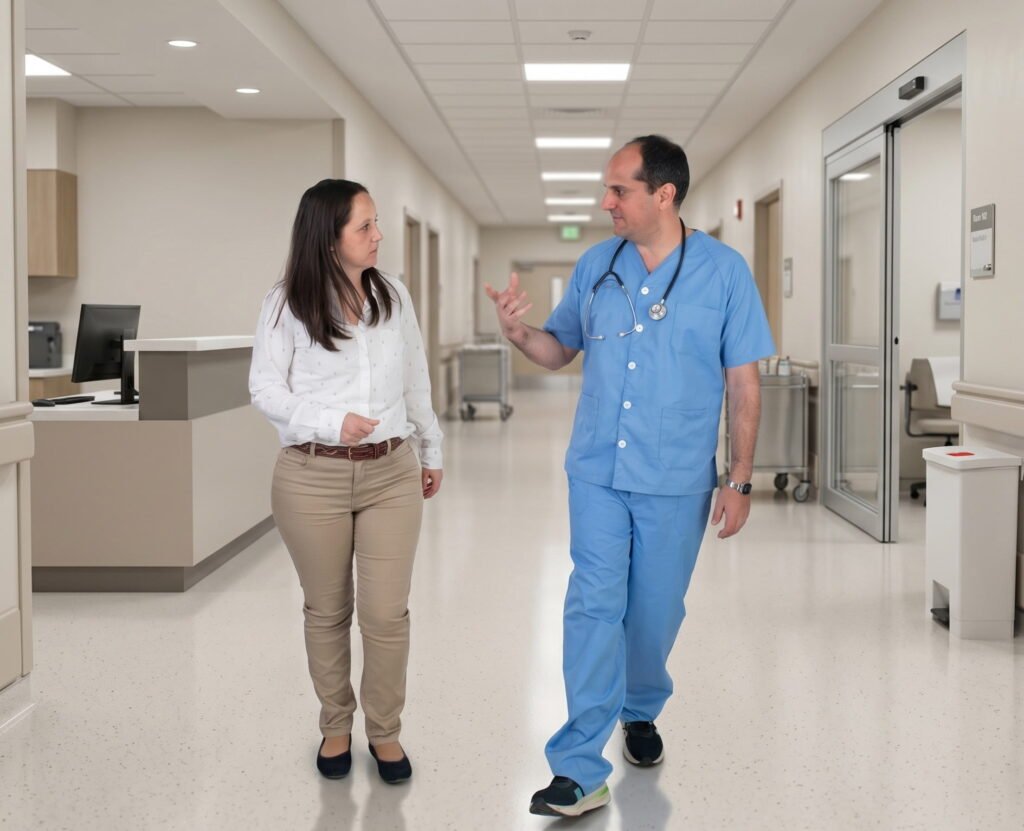
Spain operates two parallel healthcare systems:
– Public healthcare (funded through taxes and social security contributions)
– Private healthcare (accessed through insurance or direct payment)
Many doctors and specialists work in both systems simultaneously. For foreign residents, the best option often depends on waiting times, residency status, budget, and personal preference.
Spain operates two parallel healthcare systems:
– Public healthcare (funded through taxes and social security contributions)
– Private healthcare (accessed through insurance or direct payment)
Many doctors and specialists work in both systems simultaneously. For foreign residents, the best option often depends on waiting times, residency status, budget, and personal preference.
Public vs Private Healthcare in Spain
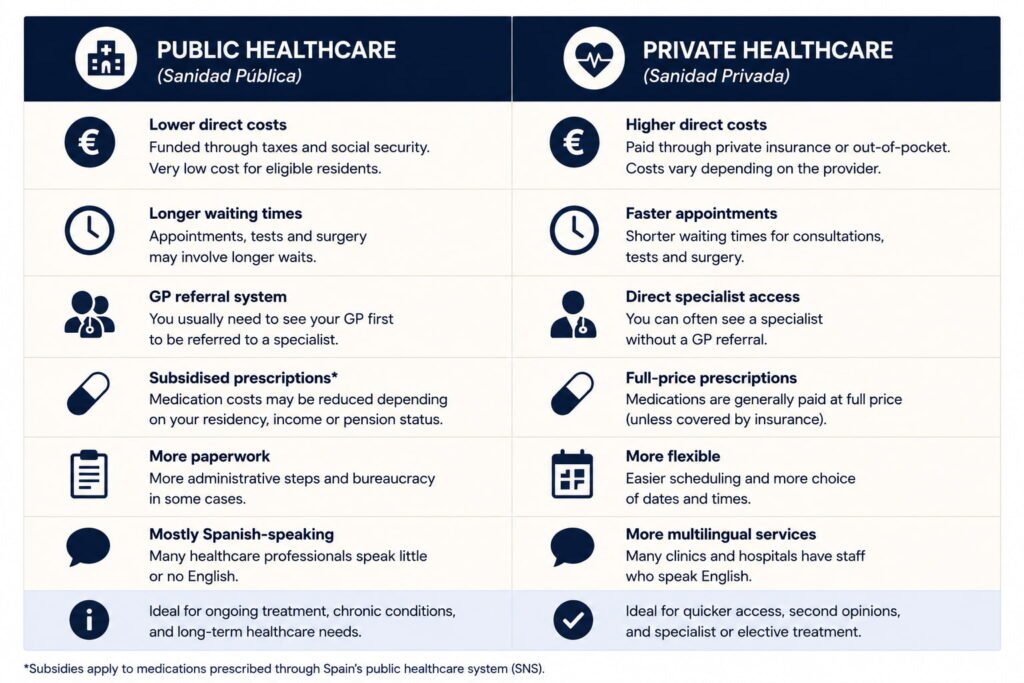
Waiting Times
One of the biggest differences between public and private healthcare in Spain is speed of access.
The public system often involves longer waits for non-urgent specialist appointments, tests, and surgery. Patients are also usually required to visit a GP before being referred to a specialist.
Private healthcare generally offers:
- Faster specialist appointments
- More flexible scheduling
- Quicker diagnostic testing
This is one of the main reasons many expats choose private health insurance in Spain.
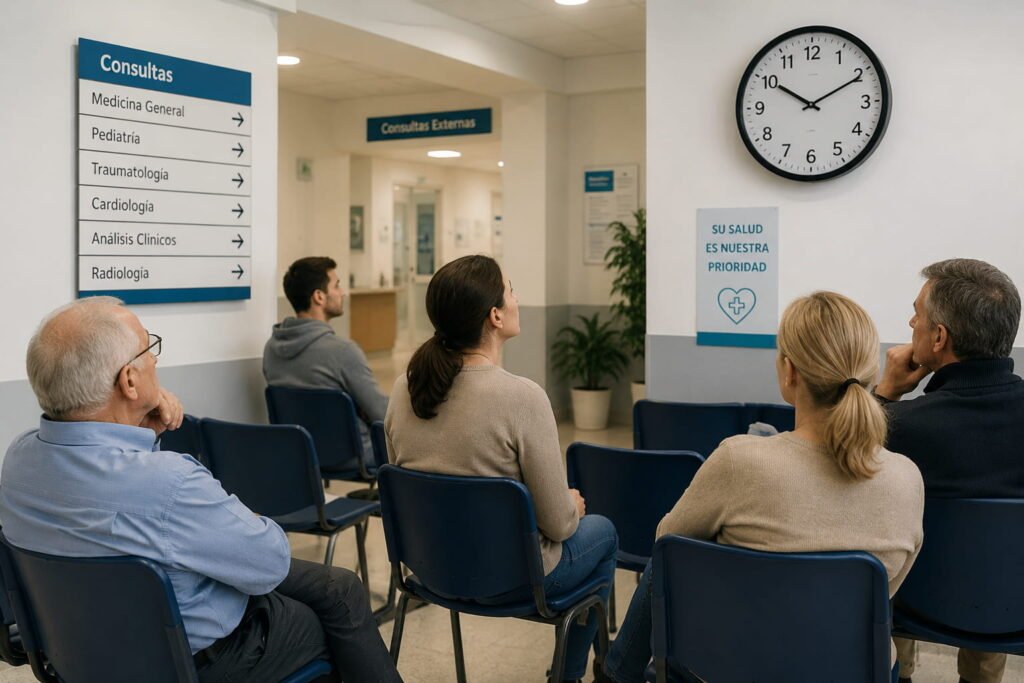
One of the biggest differences between public and private healthcare in Spain is speed of access.
The public system often involves longer waits for non-urgent specialist appointments, tests, and surgery. Patients are also usually required to visit a GP before being referred to a specialist.
Private healthcare generally offers:
- Faster specialist appointments
- More flexible scheduling
- Quicker diagnostic testing
This is one of the main reasons many expats choose private health insurance in Spain.
Prescriptions and Medication Costs
Many foreigners are surprised to discover that prescriptions issued privately are usually paid at full price in Spanish pharmacies.
When medication is prescribed through Spain’s public healthcare system (SNS), patients may receive reduced pharmaceutical costs depending on factors such as:
- Residency status
- Pension status
- Income level
Private prescriptions generally do not include these reductions.

Many foreigners are surprised to discover that prescriptions issued privately are usually paid at full price in Spanish pharmacies.
When medication is prescribed through Spain’s public healthcare system (SNS), patients may receive reduced pharmaceutical costs depending on factors such as:
- Residency status
- Pension status
- Income level
Private prescriptions generally do not include these reductions.
What is the Convenio Especial in Spain?
Not all foreign residents automatically qualify for public healthcare in Spain.
Some residents may be able to access the public healthcare system through the Convenio Especial (also known as Special Health Agreement), a scheme that allows eligible residents to pay a monthly fee for access to public healthcare.
It is commonly used by:
- Early retirees
- Non-working residents
- Some post-Brexit UK nationals
However, it is important to understand that the Convenio Especial does not always provide exactly the same conditions as standard public healthcare entitlement linked to employment or pensions.
Language Barriers in Spanish Healthcare
Although some healthcare professionals speak English, this cannot always be relied upon — particularly in public healthcare settings.
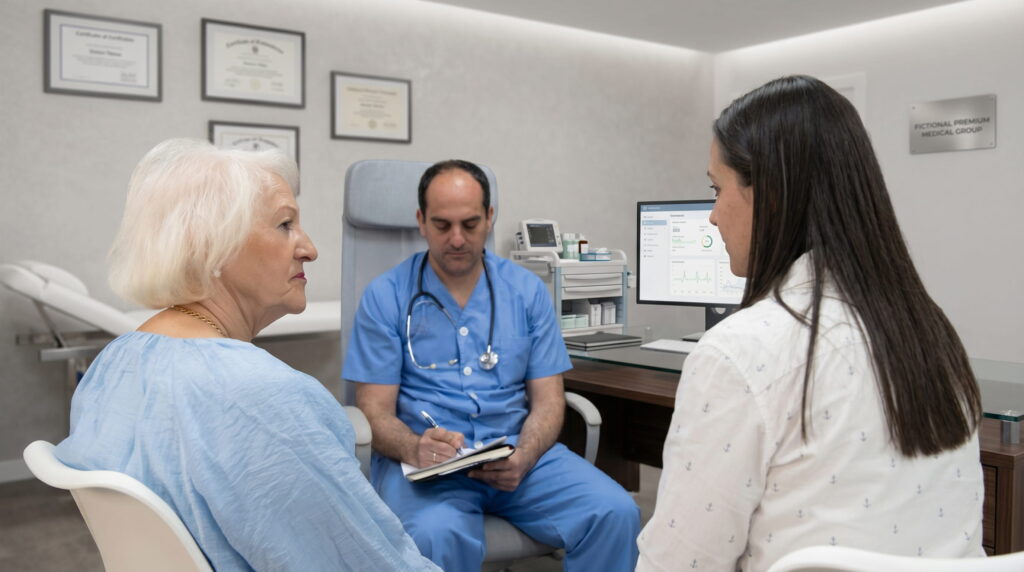
Medical appointments may involve: technical terminology, referral paperwork, consent forms and medication instructions, among others.
For many English-speaking residents, communication becomes one of the most stressful parts of attending medical appointments in Spain.
At Bridging Spain, we support English-speaking residents attending both public hospitals and private clinics across Murcia, Torrevieja, and surrounding areas.
If you wish to know more about the services we offer, click here.
Are Public Healthcare Professionals Better Trained?
It would not be accurate to say that private healthcare professionals are less qualified. Many specialists work in both public hospitals and private clinics.
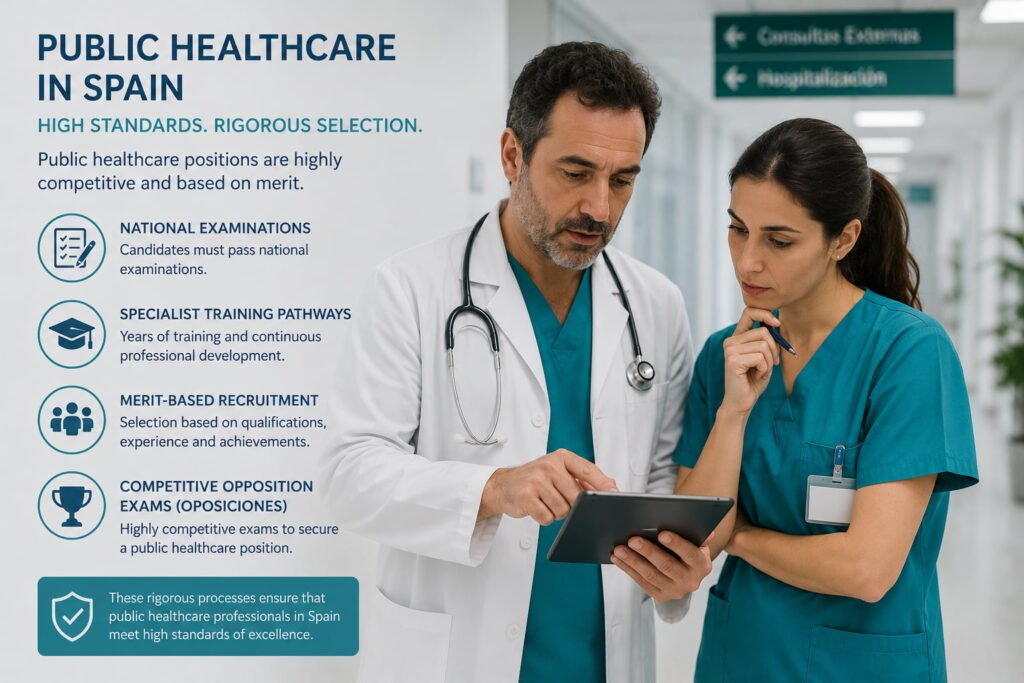
However, public healthcare positions in Spain are often highly competitive. Doctors and nurses entering the public system may go through:
- National examinations
- Specialist training pathways
- Merit-based recruitment systems
- Competitive opposition exams (“oposiciones”)
As a result, the public healthcare sector is generally considered demanding from a professional recruitment perspective.
Which Healthcare System Is Better for Expats in Spain?
There is no single answer.
Many foreign residents combine both systems:
- Public healthcare for major treatment and long-term care
- Private healthcare for faster access and convenience
The best option depends on residency status, budget, existing medical conditions, insurance access and personal priorities.

Final Thoughts
Spain offers high-quality healthcare through both its public and private systems, but the experience can feel very different from what many foreigners are used to in their home countries.
For many English-speaking residents, the biggest challenge is not the medical treatment itself, but understanding how the system works and communicating clearly during appointments.
If you need support attending medical appointments or understanding healthcare procedures in Spain, Bridging Spain provides interpreting and support services for English-speaking residents across Murcia, Torrevieja, and surrounding areas.
Not Sure Which Healthcare Option Is Right For You?
Speak with Bridging Spain before your next appointment.